
Categories
- RF Knowledge (4)


In the process of selecting RF cables or connectors, determining the appropriate cable type is the first step. There are three main types of RF cables: Coaxial, Twinaxial, and Triaxial. Each has its own unique structure, characteristics, and dimensions. Let’s explore the differences between them.
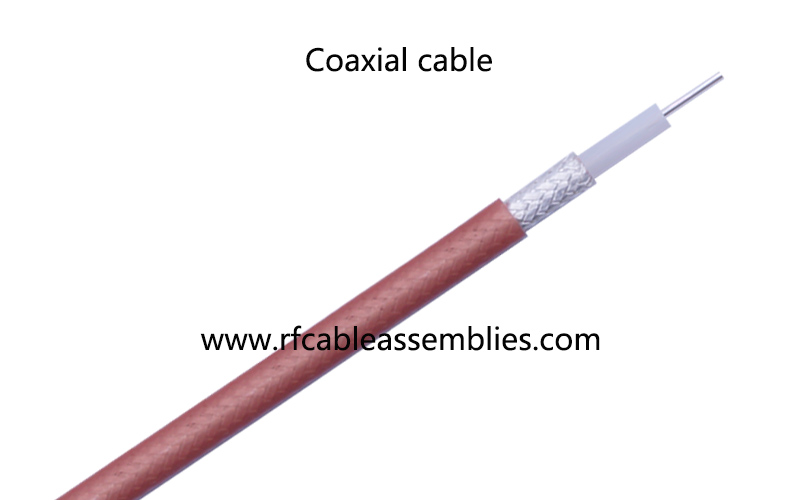
Structure
A coaxial cable consists of two conductors:
Applications
Coaxial cables play a vital role in RF signal transmission and are widely used across various fields:
1.1 Telecommunications
In modern communication systems, coaxial cables are used for both long-distance backbone communication and short-range local networks. For example, in early cable TV networks, coaxial cables transmitted TV signals from the source to households.
1.2 Computer Local Access Networks
In early computer network cabling, coaxial cables were widely used. In the early development of Ethernet, standards such as 10Base-2 and 10Base-5 utilized coaxial cables to build local access networks, enabling data transmission between computers.
1.3 Video Transmission
In video surveillance systems, coaxial cables transmit video signals captured by cameras to monitoring centers. In traditional analog surveillance systems, coaxial cables reliably transmitted real-time video, ensuring the effectiveness of monitoring.
1.4 Wireless Communication
In wireless communication base stations, coaxial cables are used to connect transmitters and antennas. They efficiently transmit RF signals, ensuring stable signal transmission and reception.
1.5 Low-Level RF Signal Transmission
In RF equipment that requires low signal levels, coaxial cables can effectively meet signal transmission needs, ensuring accurate transmission of low-level RF signals.
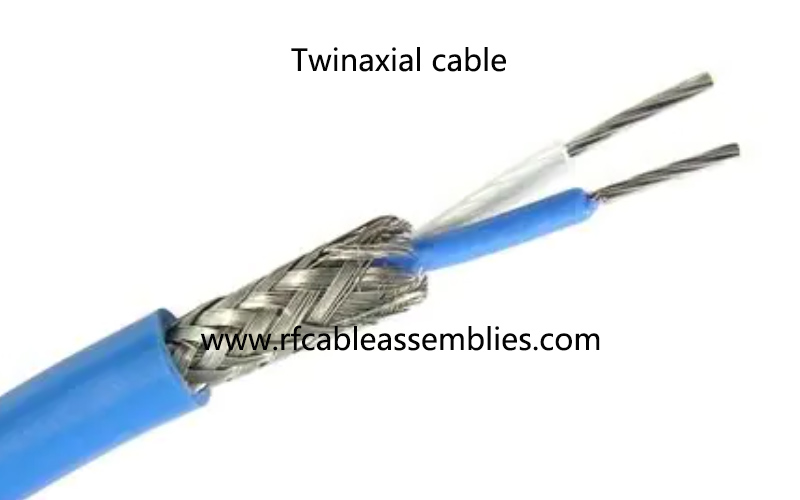
Structure
A twinaxial cable consists of three conductors:
Applications
Also known as shielded twisted pair or twin-axial cable, twinaxial cables have unique application scenarios:
2.1 Differential Data Transmission
In differential data transmission, twinaxial cables transmit high/low signals, similar to inverted images. For example, in high-speed digital signal transmission systems, differential signaling effectively improves signal immunity to interference. By transmitting differential signals, twinaxial cables allow the original signal to be recovered accurately even if some interference occurs during transmission.
2.2 Non-Differential Data Transmission
In non-differential signal transmission, twinaxial cables can be used for clock signal transmission or signal return paths. Their impedance ranges from 78 to 124 ohms, with 78 ohms being the primary impedance. In board-level signal transmission within electronic devices, twinaxial cables can flexibly transmit non-differential signals such as clock signals based on different signal requirements.
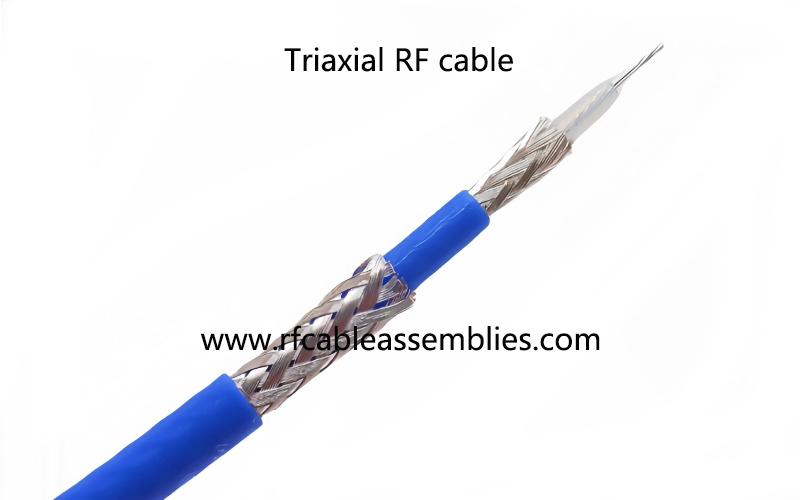
Structure
A triaxial cable consists of three conductors:
Applications
Also known as dual-shielded coaxial cable, triaxial cables offer unique application advantages:
3.1 Military Applications
In military shipboard data bus applications, triaxial cables play an irreplaceable role. On ships, where electronic devices are densely packed and electromagnetic interference is severe, the dual-shielded structure of triaxial cables effectively resists external interference, ensuring accurate data transmission on shipboard data buses and supporting communication and coordination between military equipment.
3.2 Video Applications
Similar to coaxial cables, triaxial cables can also be used for video transmission. In high-demand video signal environments such as HD surveillance systems or broadcast signal transmission, triaxial cables provide clearer and more stable video images due to their superior shielding performance.
3.3 Low-Current Testing and Measurement
In laboratory or industrial testing environments requiring low-current testing and measurement, triaxial cables can accurately transmit weak current signals. Their dual-shielded structure effectively prevents electromagnetic interference, ensuring the accuracy of test and measurement results.
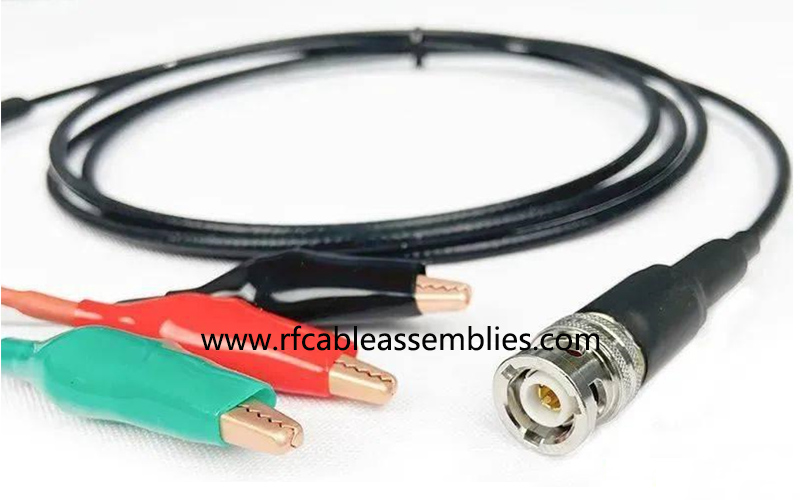
Among RF cables, coaxial, twinaxial, and triaxial cables each have their own structural and performance advantages, making them indispensable in different application fields. Whether in telecommunications, computer networks, video transmission, or specialized fields such as military and testing, selecting the appropriate RF cable is key to ensuring efficient and stable signal transmission. As technology continues to advance, these RF cables will continue to play important roles and may evolve further to meet more complex application scenarios and higher performance requirements.